

When a strategy fails, traders often blame the logic. They revisit parameters, add filters, or question whether the edge was ever real.
Much less often do they ask a simpler question:
Was I trading it at a size that made discipline impossible?
Position sizing is usually framed as a risk management tool. It determines how much capital is at stake and how volatile returns will be. But its deeper role is psychological. Size determines whether a strategy can actually be followed.
A sound system traded too large will not survive its first serious drawdown.
Drawdowns are tolerable — until they aren’t
On paper, a 15% or 20% drawdown may look manageable. In backtests, it appears as a temporary dip in an otherwise upward equity curve.
In real life, that same drawdown can feel very different.
It may affect sleep. It may alter mood. It may introduce doubt where none existed before. Suddenly, the urge to override signals or reduce exposure becomes overwhelming.
The logic of the strategy hasn’t changed. The environment hasn’t necessarily changed. What has changed is the emotional weight of the numbers.
That weight is a function of size.
Oversizing turns variance into crisis
Every strategy with a positive expectancy still contains variance. Losing streaks occur. Regimes transition. Performance clusters.
At appropriate position sizes, this variance feels uncomfortable but manageable. It can be observed and evaluated calmly.
At excessive sizes, normal variance feels existential. Losses no longer register as statistical events; they register as threats.
When that happens, discipline collapses. Traders skip signals. They exit early. They “wait for confirmation.” The system becomes discretionary without being acknowledged as such.
The strategy didn’t fail. The sizing did.
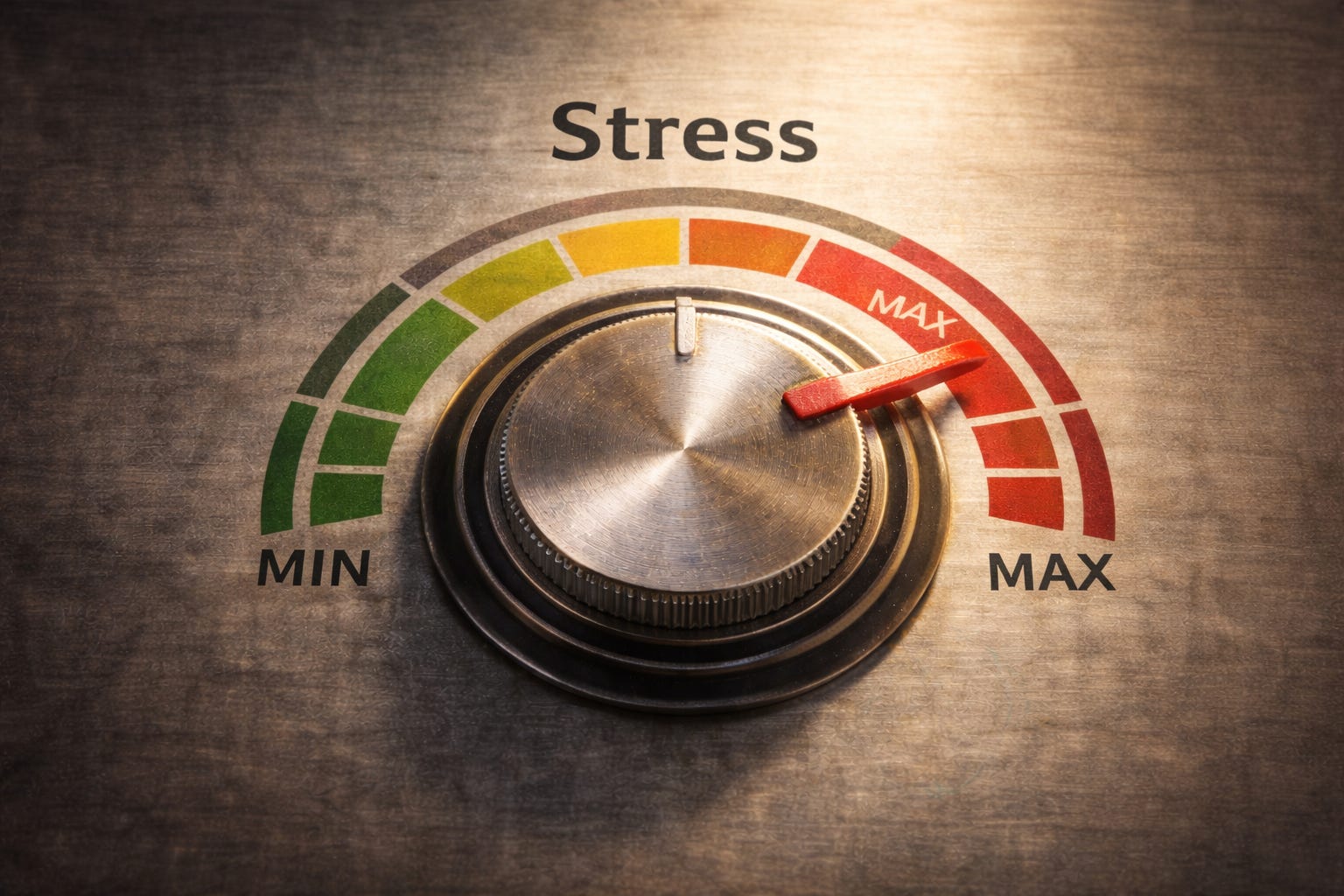
Correct sizing feels too small
One of the paradoxes of trading is that appropriate position sizes often feel underwhelming during good periods.
When markets are cooperative and returns are strong, the temptation to increase size grows. The recent performance justifies it. Confidence expands alongside equity.
But increasing size based on recent success amplifies future emotional swings. When conditions inevitably change, the drawdown that follows will feel disproportionately painful.
Sizing should be determined by worst-case expectations, not recent gains.
Position size defines behavior under stress
A useful diagnostic is simple: imagine your strategy experiencing its historical maximum drawdown tomorrow.
If that scenario feels intolerable — if it would trigger panic or forced decision-making — then the size is too large.
This is not about minimizing returns. It is about preserving decision quality.
A system can only compound if it is followed consistently. Position sizing determines whether consistency is realistic.
Smaller size extends longevity
Trading is not a short-term performance contest. It is a long-term compounding exercise.
A slightly smaller position size that allows you to:
stay aligned with signals
tolerate drawdowns
avoid emotional overrides
will often outperform a larger size that causes periodic behavioral breakdowns.
Longevity is an edge.
The psychological governor
In engineering, a governor regulates speed to prevent mechanical failure. It limits performance to preserve function.
Position sizing plays a similar role in trading. It constrains returns in strong periods to prevent collapse in weak ones.
Without that constraint, even robust systems can self-destruct under pressure.
Final thought
A strategy’s true risk is not its drawdown percentage. It is the point at which its trader abandons it.
Position sizing should be chosen not for maximum theoretical return, but for maximum survivability.
When size aligns with temperament, discipline becomes sustainable — and sustainable behavior is what allows compounding to work.